Chilliwack
Bowed Wall Repair in Chilliwack, BC
Carbon fibre straps and wall anchors stabilise bowing basement walls before they become a structural emergency.
- Licensed & Insured
- Free On-Site Inspections
- Fraser Valley–Based Team
- Fast Response Time
- No-Obligation Written Estimates
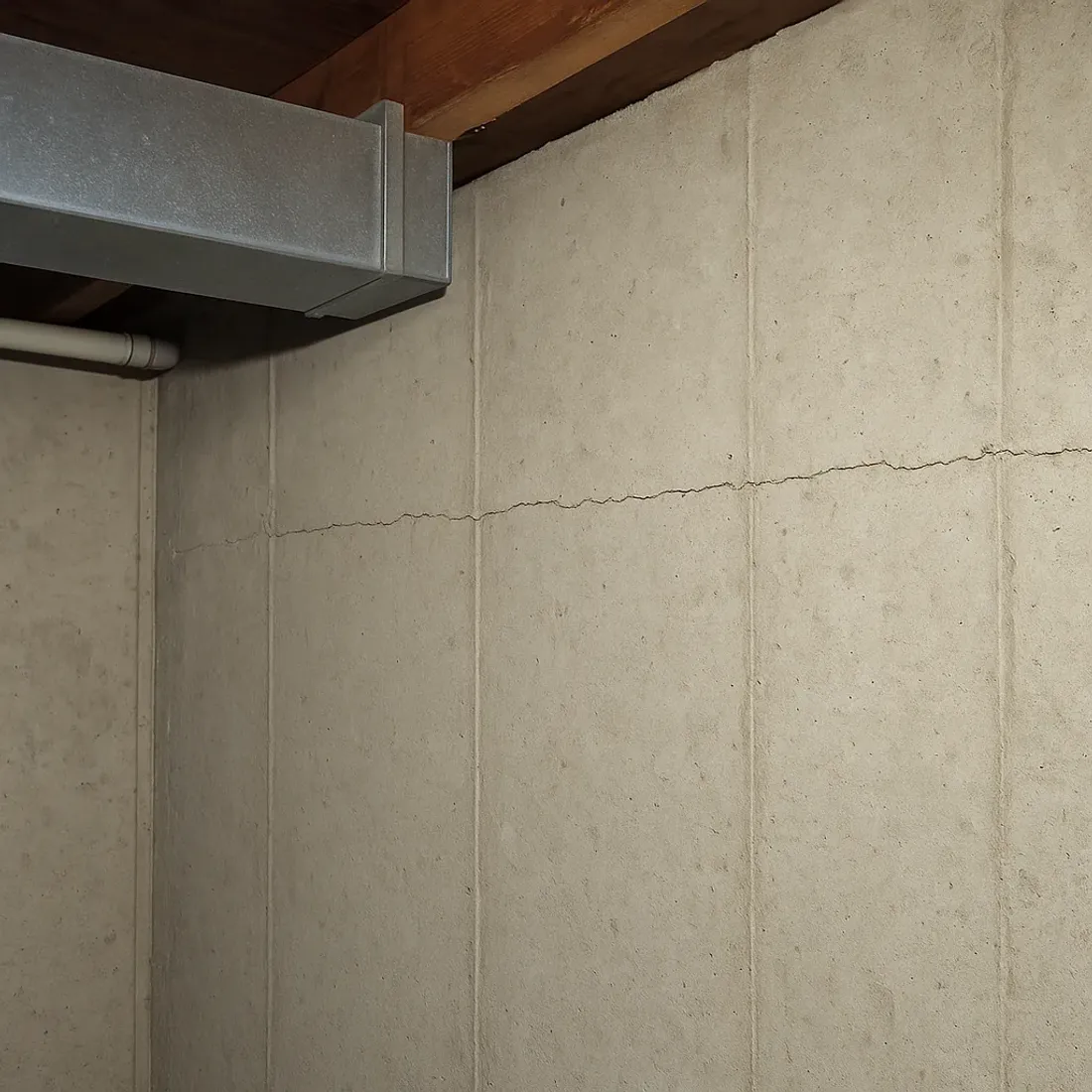
Chilliwack Foundation Repair provides professional bowed wall repair services throughout Chilliwack and the surrounding area. Our experienced technicians use proven techniques and commercial-grade materials to deliver lasting results, backed by our no-obligation written estimates.
Carbon fibre straps and wall anchors stabilise bowing basement walls before they become a structural emergency. Whether you're dealing with an urgent problem or want to address early warning signs before they become costly repairs, Chilliwack Foundation Repair is available 24/7 to help protect your home.
What You Need to Know
Bowed Wall Repair in Chilliwack
Repair Methods: Wall Anchors, Carbon Fibre Straps, and Steel I-Beams
Three methods handle most bowing wall repairs, and which one applies depends on how far the wall has moved and whether we have exterior yard access.
Wall anchors are the most common fix for mild to moderate bowing. A steel plate is set into your yard roughly 8 to 10 feet from the house, connected through the wall to an interior plate by a steel rod, and the rod is tightened over time to gradually pull the wall back toward plumb. Anchors need exterior yard access and go in roughly every 5 to 6 feet along the affected wall.
Carbon fibre straps are the right call when yard access isn't available, or the bowing is mild enough that the goal is only to stop it from moving further rather than pull it back. Strips of carbon fibre fabric are epoxied vertically to the interior wall face, top and bottom, creating a tension band that resists further inward movement without requiring excavation.
Steel I-beams handle the most severe cases: walls that have already bowed more than 2 inches or show signs of shear cracking. A beam is set vertically against the wall from floor to joist, braced top and bottom, and can in some cases be used to jack the wall back over time. This is the most involved and most expensive of the three options.
How Much Bowing Is Safe to Monitor
Not every bowing wall needs immediate intervention, but the window for a simple fix narrows the longer you wait. Bowing happens when saturated Fraser Valley clay expands against a basement wall from the outside, pushing it inward. A wall bowed less than an inch, with no active cracking, is often something we recommend monitoring with periodic measurements rather than repairing right away.
Once bowing passes roughly an inch, or horizontal cracking starts developing along the bow (a sign the wall is beginning to fail structurally rather than only flexing), it's time to act. Past 2 inches of inward movement, the wall is approaching the point where anchors and straps alone are no longer enough, and I-beams or a fuller structural rebuild become the more realistic options. Bowing rarely reverses itself and rarely stays static: a wall that measured a half inch of bow last year is worth remeasuring, not assuming it's stopped.
Cost by Method
Wall anchors typically run $80 to $150 per linear foot installed, or roughly $400 to $700 per anchor, spaced every 5 feet. For a typical 20-foot wall, that's usually $1,600 to $2,800 total.
Carbon fibre or steel straps run $85 to $280 per linear foot, with individual straps costing $350 to $1,000 each, spaced roughly every 4 feet. A 20-foot wall with straps typically lands between $1,700 and $5,000.
Steel I-beams cost more per beam, generally $500 to $1,500 installed, with beams placed every 4 to 6 feet. For severe bowing needing full I-beam coverage, total cost typically runs $4,000 to $10,000. The exact number depends on wall length, severity, and whether the wall needs crack repair or waterproofing done alongside the structural fix, which we'll always quote as a separate line item rather than bundling it in without explanation.
What Happens If a Bowing Wall Goes Untreated
A bowing wall doesn't stabilize on its own. Left alone, the same seasonal soil pressure that started the bow keeps applying force every wet season, and the wall keeps moving, slowly at first, then faster as cracks develop and the wall's structural capacity drops. Horizontal cracks that start hairline-thin widen year over year, similar to the freeze-thaw pattern that widens vertical cracks, except a bowing wall is a structural problem rather than only a water infiltration one.
At the point where a wall has bowed several inches, the repair options narrow and the cost climbs quickly, sometimes into full wall replacement rather than reinforcement. A wall anchor job that would have cost a few thousand dollars caught early can turn into a much larger structural rebuild if the wall keeps moving for several more wet seasons. If you've noticed a bow in a basement wall, even a small one, it's worth getting it measured now rather than waiting to see if it gets worse.
Why Choose Us
Why Choose CFR for Bowed Wall Repair?
- Licensed & Insured
- Free On-Site Inspections
- Fraser Valley–Based Team
- Fast Response Time
- No-Obligation Written Estimates
- Serving Chilliwack and 12 surrounding communities
FAQ
Common Questions About Bowed Wall Repair
Is foundation repair covered by home insurance in BC?
Generally no. Insurance covers sudden accidental damage (burst pipe, earthquake); gradual soil movement and concrete aging are maintenance items. Some policies cover resulting water damage from a covered event. We provide a detailed written scope of work to support any insurance inquiry.
Do you serve areas outside Chilliwack?
Yes — we cover the full Fraser Valley including Abbotsford, Mission, Hope, Agassiz, Sardis, Vedder Crossing, and surrounding communities. Call to confirm availability in your area.
How much does it cost to fix a bowing basement wall?
Wall anchors typically run $80–$150 per linear foot, or roughly $400–$700 per anchor spaced every 5 feet, usually $1,600–$2,800 total for a 20-foot wall. Carbon fibre or steel straps run $85–$280 per linear foot, generally $1,700–$5,000 for the same wall length. Steel I-beams, for the most severe cases, typically run $4,000–$10,000. The right number depends on wall length and severity, which we assess during the free inspection.
What's the difference between wall anchors and carbon fibre straps?
Wall anchors need exterior yard access. A steel plate goes into your yard, connects through the wall to an interior plate, and can gradually pull the wall back toward plumb over time. Carbon fibre straps are epoxied to the interior wall face and create a tension band that stops further inward movement, without needing yard access or excavation. Straps are the right call when yard access isn't available or the goal is just to stop the bowing rather than reverse it.
How much wall movement is dangerous?
A wall bowed less than an inch with no active cracking is often safe to monitor with periodic measurements. Once bowing passes roughly an inch, or horizontal cracking starts developing along the bow, it's time to act. Past 2 inches of inward movement, anchors and straps alone are usually no longer enough, and steel I-beams or a fuller structural rebuild become the more realistic options.
Can a bowing wall be fixed without digging up my yard?
Yes. Carbon fibre straps install entirely from inside the basement and don't require excavation. Wall anchors do need exterior yard access, roughly 8 to 10 feet from the house, so if that access isn't available, straps are usually the better option depending on how far the wall has already moved.
What happens if I ignore a bowing wall?
The same seasonal soil pressure that started the bow keeps applying force every wet season, and the wall keeps moving, slowly at first, then faster as cracks develop and structural capacity drops. A wall anchor job that would have cost a few thousand dollars caught early can turn into a much larger structural rebuild if the wall keeps moving for several more wet seasons. Bowing rarely reverses itself or stays static.
Can I repair a bowing basement wall myself?
Not safely. Bowing wall repair involves either exterior excavation to install anchors, or precisely epoxying carbon fibre straps to the interior wall face, both require judging how much reinforcement the wall actually needs based on the degree of movement. Getting that wrong risks the wall continuing to move after a repair that looked complete. This is a structural safety issue, not a weekend project, and it's worth having it measured and assessed by someone who does this regularly.
Related Services
You Might Also Need
Foundation Crack Injection
Polyurethane and epoxy injection repairs stop water infiltration and restore structural integrity — most cracks fixed in under 4 hours.
Learn More →Basement Waterproofing
Interior and exterior waterproofing systems that keep your Chilliwack basement permanently dry through BC's heaviest rain seasons.
Learn More →Bowed Wall Repair Near You
We provide bowed wall repair across the Fraser Valley. Select your area for local information:
Don't see your city? — we may still be able to help.
Contact Us
Get Your Free Estimate
Tell us about your project and we'll be in touch to schedule a free on-site assessment.
Prefer to call?
24/7 Emergency Service Available
-
Business Hours
Mon–Sat 7am–6pm
-
Service Area
Chilliwack, Sardis, Promontory Heights, Vedder Crossing & surrounding BC communities
- Licensed & Insured
- Free On-Site Inspections
- Fraser Valley–Based Team
- Fast Response Time
- No-Obligation Written Estimates